Monday, 29 June 2009

Journalism Matters

STAND UP FOR JOURNALISM

Comedians in Greater Manchester will stand up for journalism in the North West on Sunday 5 July, in an NUJ stand up comedy benefit gig, fighting the recent cuts in weekly papers and other media across the region. It follows a similar successful event held in London back in April.

BBC Radio Manchester presenter Chris Holliday will compère, and there will be a punk/ska DJ set. Other acts include three of the best from the North West’s comedy circuit, all coming out to support their local media, and raising a lot of laughs in the process. It promises to be an excellent night, with support from the top comedy agency -- and a great line up is guaranteed.

The event is at The Baker’s Vault in Stockport. And it is in Stockport that MEN Media has removed all the journalists from the local office, where the Stockport Express, South Manchester Reporter and Trafford Metro News staff were based.

Across the whole of the weekly papers in Greater Manchester, Cheshire, Lancashire -- over 36 editorial jobs have gone, and by October all of the local offices will be closed. Remaining journalists will be based in central Manchester, clearly much depleted, and far removed from the patch they are supposed to be covering.

Jenny Lennox of the NUJ said: "There has been a massive attack on local journalism in Stockport and Greater Manchester, which has removed journalists from the communities they serve. We are delighted to see that people are prepared to stand up for journalism and show how much it matters."

ENDS

Bookmark and Share

Category: PLUGGED

Sunday, 28 June 2009

Better Late Than Never

First city of film

Bradford is no stranger on the international scene, but that was in its heyday as the centre of the global wool trade. Now it’s gained another 15 minutes in the limelight of the world stage, writes Mark Cantrell, thanks to its new status as the world’s first UNESCO City of Film

THE city of Bradford is an easy place in which to become disillusioned, said the writer J.B Priestley. That may be so, but the curmudgeonly man of letters might have a twinkle in his eye to learn that the city of his birth has scooped the status as the world’s first City of Film.

So, forget Cannes, don’t stowaway to Hollywood, make your way to the Pennines instead. Surprisingly, Bradford has had rather a heady engagement in the movie-making world, albeit ‘behind the scenes’, so it is quite easy to be surprised not just by the City of Film status, but by the rich history that led to it winning the award. Even the late J.B Priestley might have been surprised, but then again maybe not, since his son Tom is involved in the business as a film editor.

In J.B’s day, ‘real men’ were forging their fortunes in the heady world of international business, when Bradford was the centre of the global wool industry. That’s when Bradford was a thriving – and curiously cosmopolitan – industrial city. It wasn’t just a city of dark satanic mills where workers combed the wool, spun the yarn, wove the cloth and dyed the fabric – but all the associated endeavours of commerce and commodity trading that made Bradford a city of significance.

In this world of hard dealing woolmen, ‘Worstedopolis’ as the city was known, there was no place for arts as a real endeavour: art was a hobby and business was the world. Little wonder, for the novelist and playwright Priestley that it was an easy place to become disillusioned.

As it was then, so it is today, but the reasons are vastly different to those of Priestley’s days. Bradford is no longer that engine of commerce and trade, weaving fortunes out of raw wool. No, the city’s heyday as an industrial dynamo has long gone, and with it has gone its sense of purpose and direction. For ordinary Bradfordians, for all the fierce pride the place may invoke, it has gone through enough ups and downs to generate perhaps more than disillusionment – but an unhealthy dose of cynicism.

Globalisation wasn’t the buzz word in those post-war years when Britain’s industrial capacity went into decline and the wool trade returned to its global roots; no longer to beat a path to Bradford’s door to have its wool processed and commoditised and traded on. The city’s self-made reason to exist faded away, and like many Northern cities, it struggled to find for itself a place – to be a place – in the post-industrial, post-textile era.

So it has staggered on through the late 20th Century and into the 21st Century, still looking to regenerate, never quite taking off, stumbling onwards into an uncertain future. Unlike some of the great Northern cities like Manchester and Leeds, which managed to reinvent themselves and thrive beyond the heyday of their industries, Bradford has never quite found its way forward.

After so many false dawns, regeneration mistakes and failures, bad faith and political mediocrity, it is perhaps little wonder that a cynicism has brooded deep into the core of the city’s soul. For many outsiders, it doubtless comes across as a desperate self-loathing, or even just a plain old miserable outlook, but it is perhaps more accurately considered the shadow of anger that comes from wounded civic pride.

There’s a fierce loyalty in the city, after all, that will come as a surprise to those who have heard the dour dislike commonly expressed of Bradford by Bradfordians; but the strength of feeling invoked is fired by the attachment to the place – and by a deep well of disappointment. Bradford and Bradfordians have seen too many glowing promises evaporate to mist over the years, to ever fully have complete faith in the rewards said to be waiting over the horizon.

For all that, Bradford has always been a city that hides its light under a bushel – whether that was in those stern days of hard business acumen when real men forged their fortunes, or in these latter years of its efforts to pull itself out of the post-industrial doldrums. Bradford is a curmudgeonly town, with a dark frown on its features, and a dour visage that likes to take advantage of those who take it at face value; beware that mischievous twinkle in the eye of Bradford’s vision, for it has a wicked humour.

So, as if in the spirit of that down-to-earth amusement, it becomes the world’s first City of Film, beating the likes of Cannes, in an honorific bestowed by UNESCO as part of its Creative Cities Network. And therein does the city have a laugh, for the title reveals some of that creative light hidden under its bushel. Bradford has a lengthy and healthy association with the moving image art, as it does with literature and theatre – hear old J.B. chuckling at that one.

Bradford, indeed, has never been purely a textile city; any definition based around that trade whether in its heyday or in its post-industrial decline is a summation made in unwise haste.

“Bradford is one of the rare cities that forge their cultural identity and integrity through the medium of cinema,” said a spokesperson for UNESCO. “Film has a central role in the city’s development and regeneration schemes, through concrete plans where it is used as a cultural tool in harmonising community relations and maintaining balance between creativity and economic development.

“The cinema connections in the city are both historical and continuous with efforts to preserve, promote and enrich the heritage of film as well as to develop constructive links between society and media. The city’s profile as a multicultural centre for film with a diversity of outreach initiatives for different ethnic groups with strong links to Asian films was also appreciated.”

Simon Beaufoy, the screenwriter for Danny Boyle’s Oscar winning movie Slumdog Millionaire, was born and bred in Bradford, so he was understandably chuffed. “This is a testimony to the city’s dedication to the film and media industry,” he said. “Not only has Bradford played a crucial role in the story of cinema and helped to shape its history, it has inspirational plans to enhance its future relationship with film, which will benefit the local community and the industry at large. It is with pride, as a fellow West Yorkshireman, that we celebrate the UNESCO honour.”

UNESCO – the United Nations Educational, Scientific & Cultural Organisation – established the Creative Cities Network back in 2004 as an international initiative to support social, economic and cultural development in the member cities. Unlike, say Liverpool’s status as Europe’s Capital of Culture last year, it brings no direct economic grant awards, but becoming a Creative City is nevertheless intended to help encourage the development and benefits to recipients.

Bradford now joins 19 other cities across the globe as a member of this network, and becomes one of only three British cities to be a member of this ‘club’, alongside Edinburgh as the City of Literature and Glasgow as City of Music. The network is designed to promote the social, economic and cultural developments of cities in both the developed and developing world, allowing them to promote their local creative industries. If nothing else, it also allows civic dignitaries their moment in the limelight (as if they ever need an excuse):

“Receiving this award on behalf of the city of Bradford is an immensely proud moment for me, but more importantly, a very proud occasion for everyone in the district,” said the city’s Lord Mayor, Councillor John Godward. “Being the world’s first City of Film will really help develop the excellent work in film already being carried out in Bradford and also encourage the younger generations to get involved and nurture the talent here in the district.”

Councillor Anne Hawkesworth, City of Film Board member, as well as the council boss for environment and culture, added: “Becoming the world’s first City of Film is wonderful news for Bradford district, residents and the local economy. The council has long recognised the importance of the creative industries to the local economy and this accolade will help increase employment opportunities, provide greater international links, boost tourism and raise the district’s profile. I’m sure news of this will result in even more film makers wanting to come to Bradford to take advantage of the stunning scenery and locations we have to offer.”

Bradford has been home to the National Media Museum since the early 1980s, when it was established as the National Museum of Photography, Film & Television. The museum is one of the few unambiguous regeneration success stories in the city’s patchy, stop-start experiences of rebirth. While many might have seen it as a titbit thrown to Northerners by the metropolitan South in the beginning, the city has in fact very much embraced it and made the museum its own.

“For almost 20 years the National Media Museum has hosted renowned film festivals such as the Bradford International Film Festival, Bite the Mango and the Bradford Animation Festival,” said Colin Philpott, director of the National Film Museum. “These festivals have attracted acclaimed actors and directors who have all helped to make Bradford a unique destination for film. With the UNESCO City of Film designation, Bradford will now go on to achieve inspirational projects in film.”

The bid for City of Film status was put together by a partnership board consisting of the city council, the National Media Museum and Screen Yorkshire, with the support of the University of Bradford and a host of film organisations, commercial, creative and education bodies. The board was chaired by city-born Steve Abbott, who has produced such films as A Fish Called Wanda, Brassed Off and American Friends.

“As a proud Bradfordian, I am delighted by the UNESCO designation,” he said. “It is a great honour, not only for the city itself, but for all its citizens. Whilst it is Bradford’s heritage in film which has secured the designation, I am confident we can bring further credit to both Bradford and UNESCO with our on-going City of Film Project.”

Sally Joynson, chief executive of Screen Yorkshire, added: “To become the first ever UNESCO City of Film is a stunning achievement for Bradford and all those involved. This announcement further cements the region as being central to film and TV production in the UK.”

Bradford’s bid for the status showcased the city’s heritage in film production and its contribution to the film industry’s technical development; its film locations and its diverse society; and its celebration of film together with its commitment to sharing the enjoyment of film through the National Media Museum and its annual film festivals.

Having won the status, the city will be looking to encourage more film makers and enthusiasts to come to Bradford, in turn boosting the local economy. The City of Film partners will also look to build the city’s national and international profile, and also enhance people’s film making knowledge and develop film making potential.

“[Bradford] has a rich infrastructure for both film makers and film lovers. It has excellent cinemas, a national museum, and some great festivals,” said James Marsh, a BAFTA award winning director.

On that note, this is perhaps an apt moment to raise one on-going dramatic chapter in Bradford’s history of film – and that is with the continuing battle by campaigners to save the former Odeon cinema that sits adjacent to the Alhambra Theatre. The cinema was closed down in 2000 and has sat boarded up and empty ever since.

Officials have argued it is derelict, unsafe, and fit only for the wrecking ball, but campaigners opposed to its destruction have produced videos and photographs they consider powerful evidence that the building might be run down after nine years in mothballs, but is far from a ruin. They consider the building an important component of the city’s architectural, as well as its cultural heritage, and they want to see the old cinema reborn. In many respects, this battle that has brewed up around the former Odeon is a symbol of Bradford’s own struggle for rebirth, and it is painfully apt given the City of Film designation.

Campaigners from the Bradford Odeon Rescue Group (BORG) believe the Odeon has many a long year ahead of it contributing to Bradford – if it can be saved from the wrecking ball. One might think that with the City of Film status, there might also come a new lease of life for this old city centre cinema. It is regarded as a classic example of its type – no flea pit was this – but this is Bradford and, as mentioned, it has seen much promise and potential squandered over the years. One might reasonably wonder how this fits with UNESCO’s mention of “efforts to preserve, promote and enrich the heritage of film”. Therein lies a tale in itself.

For once, perhaps the cynicism of a city can prove unfounded, and the object of the campaigners efforts transcend its fate to become once more a flagship building floating on the optimism and hopes of ordinary Bradfordians. However, there are those who consider the Odeon’s long-standing intended demise as a dark kernel of hypocrisy rotting at the heart of Bradford’s City of Film win.

The battle to save the Odeon is another story, and perhaps the makings of a movie in itself, but back to the City of Film. Marsh continued: “I filmed a major production – Red Riding 1980 – in Bradford in the Autumn of 2008. We shot on location all over the city and in the surrounding countryside. We had amazing local support and hired a lot of our crew locally. Visually the city has much to offer and we had no problem finding exterior and interior locations to serve our story. Unlike say London or New York, it was easy and simple to get permission to shoot all over the city. I’d love to come back and shoot another film in the area.”

Amanda Nevill, director of the British Film Institute, said: “Film is society’s chosen medium in the 21st Century. In this wonderfully diverse society, it provides an engaging and compelling bridge between ages, cultures and societies. How wonderful Britain has a designated City of Film and how apt that it is Bradford.”


Bradfordian filmed and bred

Movie productions:
  • Room at the Top: starring Simone Signoret and Laurence Harvey
  • Billy Liar: starring Sir Tom Courtenay and Julie Christie
  • Yanks: starring Richard Gere
  • The Railway Children: starring Jenny Agutter
  • The Dresser: featuring Oscar winner Albert Finney
  • Monty Python’s The Meaning of Life: produced by Steve Abbott
  • Rita, Sue & Bob Too: starring Kulvinder Ghir
  • Fairytale: A True Story: starring Harvey Keitel and Peter O’Toole
  • Private Function: starring Michael Palin
  • The Damned United: starring Michael Sheen
  • My Son the Fanatic: starring Rachel Griffiths
  • L.A Without A Map: starring David Tennant
  • Blow Dry: starring Alan Rickman and Natasha Richardson
  • Like Minds: starring Toni Collette
Television productions:

  • The Red Riding Trilogy was filmed on various sites in Bradford
  • White Girl was filmed in various sites within the city
  • The Royal was filmed at St Lukes Hospital, Bradford
  • Emmerdale, filmed in Burley-in-Wharfedale
  • Spooks: Code 9 was filmed at Bradford Police Station and other locations within the city
  • Wuthering Heights was filmed at East Riddlestone Hall
  • Sunday Life was filmed at Dalton Mills, Keighley

Every year the National Media Museum hosts the following film festivals in Bradford:

● Bradford International Film Festival
● Bite The Mango
● Bradford Animation Festival

The National Media Museum: www.nationalmediamuseum.org.uk

Bradford City of Film: www.bradford-city-of-film.com

Screen Yorkshire: www.screenyorkshire.co.uk


Mark Cantrell,
Stoke-on-Trent,
27 June 2009


Copyright © June 2009. All Rights Reserved.

Bookmark and Share

Category: FEATURE

Tuesday, 23 June 2009

Warm Welcome

First impressions

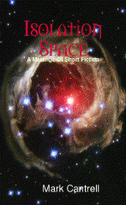
THERE are some warm words of praise for the anthology Isolation Space in the latest issue of literary journal the Writers’ Muse (#49)

Published by Lulu, the book is Mark Cantrell’s first paperback fiction collection. It presents a challenging and thought-provoking array of science fiction, fantasy, and horror, together with some more literary works, and has earned itself a quick thumbs up from the Muse.

Jim Palmer, editor, said: “Isolation Space will be reviewed fully next issue but what I can say is that if you’re a science fiction fanatic and hanker for the ‘Golden Age’, then you can do no better than to get hold of a copy of this book. The pieces I read took me back to the wonder I felt when I first discovered science fiction and horror. And I loved it!”

The Muse is a quarterly literary journal that publishes short fiction, articles, topical reviews, and short plays. To find out more about the magazine, visit www.writersmuseonline.com.

Isolation Space is published by Lulu | ISBN: 978-1-4092-7030-0 | Price £9.99 (284 pages).

For more information visit www.mark-books.blogspot.com.

MC

Bookmark and Share

Category: NEWS

Saturday, 20 June 2009

Everything's Political

Hold the banners high for political poets

‘Living in 21st century Yorkshire’ is the theme of a political poetry competition held as part of the annual Raise Your Banners Political Song & Book Fair.

Poems entered to the competition must be original, unpublished works no longer than 50 lines long. The deadline for entries is 1st September 2009. Poems should not identify the author. Full details must instead be supplied on a separate page, providing full name, address, email, telephone number and the title of the entered poem.

Entry is free and two copies of submitted poems must be supplied. The address for submissions is: Raise Your Banners Poetry Competition, c/o Bradford Resource Centre, 17-21 Chapel Street, Bradford, West Yorkshire, BD1 5DT. Poems can also be submitted as email attachments to raiseyourbanners@gmail.com. ‘Poetry competition’ must be entered on the subject line.

The winners and runners up will be notified by post by the 1st October 2009. Winning poems are to be displayed during the book and song festival, as well as in the festival programme. Furthermore, if there is sufficient demand then they will be compiled for publication as an anthology. The winning poets will also be asked to read their entry during the festival.

Raise Your Banners Political Song & Book Fair will take place at St Peter’s House, Forster Square, Bradford from the 6th to 8th November 2009. For further information visit: www.raiseyourbanners.org

MC

Bookmark and Share

Category: NEWS

Friday, 19 June 2009

Where there's a will there's a way | Housing Excellence

Where there's a will there's a way | Housing Excellence

Shared via AddThis

Category: FEATURE

Going down the local | Housing Excellence

Going down the local | Housing Excellence

Shared via AddThis

Category: FEATURE

Sunday, 14 June 2009

Writing Wrongs

Another step on the paper trail of rights

Conventions guaranteeing rights are all very well, but at the end of day it is action by real human beings, at every level in society, that turns paper aspiration into the kind of fiery principles that burn in our hearts and minds, writes Mark Cantrell

THE UK Government has ratified an international ‘Bill of Rights’ that recognises and aims to protect the human rights and freedoms of disabled people. Even as it has embraced the principles enshrined in the United Nations Convention on the Rights of Persons with Disabilities, however, it has done so on a ‘pick and choose’ basis; rather suggesting that disabled people can have their rights, but only when – and where – it suits policy agenda.

Even so, that didn’t stop the Government from patting itself on the back. Jonathan Shaw, Minister for Disabled People, said: “The ratification of the Convention is a very significant landmark, for disabled people and for UK Government and society as a whole. Not only does it show the Government’s commitment to equality of human rights for disabled people, but our determination to achieve equality by 2025. There are an estimated 650 million disabled people in the world, including over 10 million in the UK. Now that we have ratified, we can start implementing the Convention.”

The United Nations Convention on the Rights of Persons with Disabilities was signed in New York back in March, with the Government finally ratifying it this month (June). The document is designed to promote, protect and ensure the human rights, freedom and dignity of disabled people. The document sets out the rights that disabled people should be able to enjoy on the same basis as other people. It also sets out the obligations on states to protect, promote and ensure those rights. Furthermore, it sets out guidance on how rights and equalities should be interpreted from the perspective of disabled people all over the world.

Despite the significance of the Convention’s ratification, the Government chose to opt out of certain key areas: namely education, immigration, defence and benefits. This hasn’t gone down in one smooth swallow, as far as some disability rights campaigners are concerned, but even so they have acknowledged the significance of the ratification – as far as it goes – and the legal frameworks this establishes for people with disabilities.

Alice Maynard, Chair of the national disability charity Scope, is also a member of the United Nations Convention Campaign Coalition (UNCCC), which has campaigned vigorously for the Convention to be ratified. She welcomed it as a “momentous day for disabled people’s rights in the UK”. It was, after all, billed as the first human rights treaty of the 21st Century – and acknowledges the inequalities currently faced by disabled people in the UK.

“The Convention gives disabled people in Britain a legal framework that protects and promotes our rights and freedoms as equal citizens,” she said. “The need for the treaty is more urgent than ever in light of the widespread breaches of disabled people’s human rights both in the UK and across the globe.”

However, as far as the opt-outs go, she added: “It is a shame that the Government has not taken the opportunity to remove reservations in several areas and ratify the Convention in its entirety. However, we must now look ahead – to focus on making these rights a reality and ensure the Convention is efficiently implemented so that disabled people are able to enjoy full inclusion as equal citizens in our society.”

Some of the rights expressed, such as the right to dignity, freedom, equality and justice, are already regarded as universal among the able-bodied populations, so it begs a rather sinister question why these rights should need a particular protection for disabled people. Are disabled people not human, one might ask? Alas, all too often, throughout the world, the humanity of the disabled is often called into question, if not in word, then in deed.

And such views can reside uncomfortably close to home, in the very heart of so-called ‘enlightened societies’, as a survey carried out by Scope suggests. It found a high level of perception that those with disabilities are somehow ‘inferior’. Though the survey also showed a high degree of support for equalities for this group, it shows not only that people are a paradoxical breed, but also reveals the seeds of why a targeted expression of what are otherwise universal human rights is needed. To perceive some inherent ‘inferiority’ in one group can, if left unchallenged, and if the circumstance arise, be a step towards denying the group’s humanity – and it takes little imagination to see the kind of slippery slope this might become.

While such surveys are inevitably imperfect and limited they nevertheless can glean some worthwhile snapshots of perception. They provide food for thought, rather than empirical verdicts, so while they must be taken with a large dose of salt, they are nevertheless instructive. In this snapshot, some 2,000 UK adults took part in an online survey carried out by the polling firm ComRes, and some 53 per cent said they thought most people in Britain saw disabled people as inferior.

Following this line, 56 per cent thought that disabled people were seen as ‘victims’ or ‘figures of pity’ while 38 per cent said they were seen as a ‘drain on resources’.

On a more positive note, the survey revealed a high degree of support for disabled people’s equalities. Some 83 per cent responded that would complain if they saw disabled people being treated unfairly, while 59 per cent said they would like to help raise awareness about the importance of access for disabled people.

When asked what measures are needed to tackle discrimination against disabled people there was a strong support for improvements to public transport services to make them more accessible. This was backed by 93 per cent in the survey, just ahead of those who wanted to see better access to public buildings, and tougher measures against those who occupy accessible parking spaces without a blue badge.

“Our survey unearthed some fascinating findings, showing that most people recognise that disabled people are generally viewed in a negative way in British society,” said Maynard. “This certainly chimes with my own experience as a disabled person, and that of many of the disabled people we work with, who have to battle stereotypes, low expectations and sometimes outright hostility in our daily lives. However, it is encouraging that there is strong public support to tackle discrimination against disabled people. This shows a real willingness to make the changes needed for disabled people to be treated more fairly and equally.”

Towards the end of May, before the ratification of the Convention, the United Nations Committee on Economic, Social & Cultural Rights (UNCESCR) released its periodic report into how the UK measures up to the Covenant on Economic, Social & Cultural Rights. This is a treaty that came into force in 1976 and to which 160 states are signed up to; it recognised, among many things, the rights to work, to form trades unions, rights to an education, social security and more.

The latest review of the UK’s performance found that despite some improvements, some groups in the UK – disabled people being one of them – continue to experience significant inequalities in wages, access to health and housing and other social services. For all the advances made, and it can only boost the significance of the Convention’s ratification, it shows there is a long way to go in reducing the divide between the life experiences and chances generally experienced by people with disabilities and those who have none.

“[T]he most disadvantaged groups in Britain still struggle to enjoy equality in terms of their fundamental rights to work, housing and health which a fair society should guarantee,” said John Wadham, of the Equality & Human Rights Commission.

Treaties and conventions, reports and surveys, can do nothing in themselves to enforce and improve human rights, or the freedom to take part on an equal basis in society, but they can play an important informative role, raising awareness and stirring others to action. In many ways, they are the paper equivalent of hot air, but there’s the thing – sometimes hot air can get us heated up enough to take matters into our own hands.

Ultimately, that’s where the difference lies – in the concerted action of people fired up with a desire to forge a fair and equal world. The rest is just the paper trail, recording progress – or the lack of it.

ENDS

Snapshots of disability

  • Around 10 per cent of the world’s population live with a disability. In terms of real numbers that is some 650 million people worldwide, according to the UN. They are the world’s largest, but in many ways least regarded, minority
  • In countries with life expectancies over 70, individuals spend an average eight years – 11.5 per cent of their life span – living with disabilities, according to the World Health Organisation (WHO).
  • Eighty per cent of people with disabilities live in developing countries, according to the UN Development Programme.
  • Disability rates are significantly higher among group with lower education attainment in the countries of the OECD. On average, 19 per cent of the less educated are said to have disabilities, compared to 11 per cent of the better educated.
  • In most OECD countries, women report higher incidents of disability than men.
  • The World Bank estimates that 20 per cent of the world’s poorest people are disabled, and tend to be regarded in their own communities as the most disadvantaged.
  • Women with disabilities are recognised to face multiple disadvantages, experiencing exclusion on the grounds of both their disability and their gender. Women and girls with disabilities are particularly vulnerable to abuse.
  • According to UNICEF 30 per cent of street youths are disabled.
  • Mortality for children with disabilities may be as high as 80per cent in countries where under-five mortality as a whole has decreased below 20 per cent, says the UK Department for International Development. It adds that in some cases it is as if children are being ‘weeded out’.
  • In the UK, 75 per cent of companies on the FTSE 100 on the London Stock Exchange are said to not meet basic levels of web accessibility, causing them to lose out on more than $147 million in revenue.


Mark Cantrell,
Stoke-on-Trent,
14 June 2009


Copyright © June 2009. All Rights Reserved.


Category: SOCIETY

Saturday, 13 June 2009

Ready Salted

Save our salt

The cold winds of recession are blowing through the pages of poetry after subsidy funding came to an end for Salt Publishing. However, the directors of the small press venture are seeking to hold out against the economic storm with an urgent SOS – 'Save Our Salt'.

Salt Publishing has struggled since June last year when the economic downturn began to affect the press, its directors said. The organisation has only one £4,000 grant due from the Arts Council England, after which it will no longer be able to apply for arts funding. Spring sales were down 80 per cent on the previous year despite some improved trading in April. The last year, Salt reports, has left it with a deficit of £55,000.

To resist the crisis the directors of the publishing house are urging people to buy a book, whether that is online from the publisher itself, through bookshops, or via Amazon.

“It's proving to be a very big hole and we're having to take some drastic measures to save our business,” a spokesperson said. “Tell your friends. If we can spread the word about our cash crisis, we can hopefully find more sales and save our literary publishing. Remember it's just one book, that's all it takes to save us.”

Salt Published can be found at www.saltpublishing.com

MC

Category: NEWS

Saturday, 6 June 2009

New Source For Mutant Mars

In Scribd We Find The Mutant Pens

You can download Attack of the 50-Foot Verbose Mutant Killer Fountain Pens from Mars from Scribd.com.

The anthology presents an eclectic and downright eccentric collection of short fiction, journalism, essays and prose written by Mark Cantrell. The PDF e-book was self-published FREE under a Creative Commons licence by the author in 2006 on his website Tyke Writer Export [www.tykewriter.supanet.com]

Since then, the publication has been made available on Many Books and subsequently sk.im. Now, Mark Cantrell has made the book additionally available on Scribd.

The e-anthology is FREE to download, and pass around, provided it is done so free, the anthology is not changed in anyway, and the author is attributed. Copyright is retained on individual stories within the collection, so they cannot be shared, published, or otherwise made use of other than in the context of this anthology.

In addition to 'Fountain Pens From Mars' the author has also published his first novel, Uranium Fist, also available from Tyke Writer Export or Many Books. The novel is curious tale of revolution, written to capture the feel and tone of early 20th century radical work, but set on a future Terran colony world, it is deliberately retro in feel, and ponders just how far might ruling elites go to protect their power. A paperback edition is also available from Lulu, price £6.95, for enthusiasts of literary curios.

Mark Cantrell's first paperback anthology of fiction, presenting updated and revised versions of some of the stories in Fountain Pens, along with a diverse selection of his other fiction work is also published on Lulu. Isolation Space is priced £9.99.

Deus Ex Insomnia, his first paperback collection is also available to buy from Lulu or from Amazon. Visit www.lulu.com/tyke21 for more information. Or visit Amazon. More information on all these titles can be found at Book Marks www.mark-books.blogspot.com

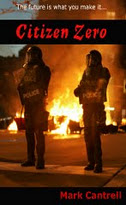
To date, he has written three further novels, for which he is currently seeking a publisher. Details about his second novel, Citizen Zero, can be found at www.zerocitizen.blogspot.com

MC

Template by - Abdul Munir | Daya Earth Blogger Template