Sunday, 6 December 2009

There's Always Hope...

Hope Remains
By Mark Cantrell


Hope was always there,
Goading me on,
Pushing,
Always pushing, never letting go.
Hope was with me, a constant
Companion, whether I wanted Hope
Or not; wherever I went,
Whatever I did,
Hope was there, whispering in my ear,
Urging me on, never heeding
Despair.
Hope wouldn’t let me go,
Never let me rest.
Hope, stifling, Hope,
Never any peace, no rest,
Just Hope,
Until I lost it, until the Rage
Finally said ‘ No more!’
That’s when I grabbed Hope, dragged Hope,
Down, into the cellar, dark,
Where I forced it, half-pleading,
Otherwise urging, pushing, nagging
Not to give up on Hope.
But I’d had enough,
Heard enough,
My anger flared, a bullet fired,
I shot Hope dead,
Buried the remains, then
Walked away.
There’s no such thing
As Hope...
Only stinking remains,
Rotting in an unmarked grave.


Mark Cantrell,
Manchester.
22 September 2009

This poem makes its first appearance here.

Copyright © September 2009. All Rights Reserved.


Bookmark and Share


Category: POETRY

Sunday, 8 November 2009

The World Awaits...

Internet Publishing
By Mark Cantrell

Logged on to the labyrinth, looking for an audience,
Begins a journey through the maze of silent
Gloom-clogged corridors, all leading to endless virtual
Potential, so it says, so I follow,
The path of digital endeavour.
Reach out, search out, in these digital by-ways,
For eyes and minds
Worldwide, that might shed life on verbal art.
In time it leads, this path, to the deepest basement,
In the subterranean bowels
Of dereliction,
The building crumbling on the edge
Of a forgotten cyber-town, clad in cloying electron mist.
There in the dark, staggering by torchlight,
This author follows the spoor of hopeful
Anticipation, discovering the trail
Once blazed by Hope’s eager passage.
In that basement, the lowest level,
Where decay and mould make their nest,
The corridor at last meets destination’s end,
That place where public attention hides.
At the end, a room, dark,
Where words, pinned like dessicated bugs are stored
On the noticeboard of publication.
Forever unseen, it seems, still, the author adds his verse,
To the clamouring cacophony of silent, silenced voices.
Left amidst the yellowed scraps
Of paper, all born in forlorn hopes, yearning,
To complete their birth,
They wait, the words,
They wait.
They wait, and the damp blots ink,
The mildew stains, the heart chills, hope melts,
Dripping its decay to add substance
To ever-deepening shadows.
Here, in the world-wide catacombs,
In the vaults of digital dreaming,
The words cry out their muted squeals of pleading,
Need, for the reader
That never comes.


Mark Cantrell,
Stoke-on-Trent,
15 October 2009


Copyright © October 2009. All Rights Reserved.


Bookmark and Share

Category: POETRY

Friday, 23 October 2009

For Nick Griffin

Wasteland
By Mark Cantrell

Imagine
A land where the white man
Rules supreme,
Where no skin tone
Deemed too dark ever sullies
The eyes of Avalon’s
‘Aryan Race’.

Imagine this Albion,
Cleansed of foreign intrusion,
Where no multi-cultural
Taint will ever again stain
The grace of Anglo-Saxon
Utopia.

Consider this England,
Where no foreign race
Mingles its face,
Amidst the monotony of pale,
Where one people, one kind,
One nation,
Shouts it roar of triumphant regale.

Foresee this Sceptred Isle,
Where hatred stamps its feet
To the bitter tune
Of purity’s jackbooted march,
Where rage sings its song, dancing
A stomping frenzy on the relics
Of proud diversity, here at home
And abroad.

Consider this dream,
This England...

And shove it...

For it is not my dream,
It is not my hope,
To live in a future
Ethnically cleansed,
Brutalised and diminished,
So culturally eviscerated,
That it dies
Whitewashed
To a state of wasteland.

This England – not!


Mark Cantrell,
Stoke-on-Trent,
23 September 2009


Copyright © September 2009. All Rights Reserved.

Bookmark and Share

Category: POETRY

Thursday, 15 October 2009

Sample A Vampire

One For The Road

The above story features in the paperback anthology Isolation Space, available from Lulu. For more information about the book visit Book Marks.

Category: FICTION

Monday, 21 September 2009

Child's Play

Money for child fiction

Unpublished children’s authors are invited to submit their work to the 25th ‘write a story for children’ competition, run by the Academy of Children’s Writers (ACW).

The competition is open to UK writers over the age of 18, though self-published authors are welcome to try their hand. The deadline for entries is 31 March 2010, with the winners announced by the end of May.

Competition is said to be tough. Last year, some 2,000 entries were received. A cheque for £2,000 will go to the first prize winner, while the second and third prize winners will receive £300 and £200 respectively.

Entry forms, together with further information, are available from: Write A Story For Children Competition, Academy of Children’s Writers, PO Box 95, Huntingdon, Cambs, PE28 5RL.

A stamped, addressed envelope must be included for receipt of the forms. Alternatively, the forms and information can be downloaded from www.childrens-writers.co.uk

MC


Bookmark and Share

Category: COMPETITIONS

Sunday, 23 August 2009

Reviewed In Isolation

Fresh fiction is pure ‘golden’

Isolation Space,
By Mark Cantrell,
Published By Lulu
£9.99 | ISBN: 978-1-4092-7030-0 | Paperback (284 pages)

Available from Lulu


Mark Cantrell’s anthology Isolation Space gained some positive feedback in the latest issue of Writers Muse magazine. The bi-monthly publication features a review of the paperback collection in the current issue.

The anthology, published by Lulu, contains 20 stories by the author, combining a mix of science fiction and horror along with some more stories of a more contemplative and thought-provoking nature. It certainly presents an engaging mix for anyone for a taste for these genres, and more than a little for those whose tastes straddle the boundaries of literary strictures.

In his review, Jim Palmer wrote in 50 (August 2009): “As well as the horror and science fiction pieces, there are some wonderfully observed satirical stories. It’s hard to write satire that leaves the writer helpless with mirth, rage and realisation of the truth behind the story, but Mark achieves it brilliantly. His pace when writing these types if pieces is inestimable...

“Like many of the best science fiction and horror stories, there are twists in the tail of many of these pieces, and, also like many of the best in those genres, then end, when it hits you, is not at all expected...

“If you love being thrilled, frightened, intrigued, fascinated and engrossed, you can do no better than get hold of this book.”

Writers Muse is published every second month and presents a diverse range of fiction and articles; thought provoking and satirical, hilarious or downright serious, disturbing and exciting, entertaining and engaging, the magazine fits well on any literature-lovers shelves. To find out more visit the magazine website at www.writersmuseonline.com.

For more information about Isolation Space, visit Book Marks, or go direct to the publisher’s website Lulu and order a copy now.

MC

Bookmark and Share

Category: REVIEWS

Saturday, 22 August 2009

New Labour Wants You...

Signing On For Social Control

An Essay By Mark Cantrell
Copyright © August 2009


To its critics, the Government’s proposed Welfare Reform Bill is the wrong bill at the wrong time; one that will transform the Welfare State into a punitive ‘workfare state’. Mark Cantrell argues that the imposition of such a draconian regime is perfectly fitted to an era of recession, as the ‘reform’ of the welfare system represents an overlooked theatre in the creation of an authoritarian ‘surveillance society’

* * *

THE Labour Government has steeped itself deep in the brew of authoritarianism ever since it came to power in 1997. None of that stern edge has been tempered by humility, nor a moral reappraisal of its collective efforts, in the wake of the scandals and sleaze that have overtaken it in recent months. Decadent and overbearing, it has always been about power – not principled leadership – and so this poisons every aspect of its existence.

To the Labour Party, the essential condition of the ‘social contract’ is that they the Government do as they see fit, while we the governed do as we are told. The reform of the Welfare State is but one manifestation – albeit a somewhat overlooked one – of that re-ordering of the ‘social contract’ to foster a more authoritarian society; one where the vast majority of the populace – working or not – must account for and seek permission for their existence before an ongoing ‘tribunal of officialdom’.

Like economic policies that push and promote the ‘free market’ and consumerism, welfare reform is a facet of the Government’s drive to shape society into something it deems more fitting to fulfilling the needs of both Big Business and the State – it’s pure icing on the cake that it also allows the architects of a stern ‘new moral order’ to wag a disapproving finger in the faces of the ‘undeserving’.

We have seen many manifestations of the Labour Party’s unforgiving moralistic bombast at work, both in its policies and in the presentational theatrics of politics; we have seen the puritanism; we have seen the near-colonialist mentality that underwrites a certain noblesse oblige attitude towards the populace, at least in rhetoric; we have the party’s ministerial high-handedness; and we have tasted the sour flavour of the current administration’s collective and individual hypocrisy.

There are many reasons for this odious mix of traits. Not least among them is a party that abandoned all principle to win and then retain office; a party that substituted a coherent world-view – ideology if you will – to underscore its policies in favour of the vacuous frontage of marketing and consumerist consultation. New Labour was a political party forged of the fabrics of the Emperor’s New Clothes.

These days, it’s a pretty threadbare garment and fast unravelling, even by its original loose standards, but even as he is led off with an ASBO, the crowds have begun to take notice of the precocious – and loud-mouthed – boy who first noted the Emperor’s nakedness. The Government is fast trying to spin a replacement garment out of the shredded principles and rhetorical soul of the older party it replaced.

Stand And Be Judged Little England

NEXT year is judgement day for Gordon Brown, once Tony Blair’s co-conspirator in all things New Labour, now his successor in the role of Prime Minister, and his party is dying beneath him, but all of a sudden the New Labour Party has discovered in the vaults the old concepts of equality and fairness, a recognition of the plight of the poor, and a desperate attempt to (apparently) distance themselves from the rich they have adored these past ten years and more.

This is the race to the lifeboats, but it changes little about the party that has governed Britain and made it a sterner, harsher, more socially divided place through both boom-time and bust. Nor is this party, newly ‘awoken’ to the ideals of its forebears in the labour movement, any different to the stern beast that has pushed an authoritarian agenda unprecedented in post-war times; one that has made its reputation in stripping away civil liberties and the many freedoms that Britons take for granted, whilst at the same time slipping its sticky fingers into its victims’ wallets.

Fore sure, Labour likes to crack the whip, it enjoys talking tough, and it has pushed hard the agenda that seeks to enclose civil society in the bars of rigid criminal legislation and the ominous gaze of the CCTV camera. Only last year a report from the information commissioner warned that Britain was “sleepwalking into a surveillance society”, adding more fuel to the heated debate that British society is in danger of becoming a police state.

We have heard much about rising police powers to curtail demonstrations of political discontent, not to mention the increasingly paramilitary nature of the police; the ubiquitous eye of CCTV; the rise of the all-encompassing database state, compiling ever-more detailed biographies of every citizens’ daily life (and then duly losing it in a taxi), as the State pushes itself deeper into every aspect of life in this country.

Certainly many people are afraid that civil society is being abolished piecemeal and that we are living under the shadow of the State to an unprecedented degree. That such a heated debate can continue, that vociferous critics don’t find themselves ‘disappeared’, or otherwise dragged off by the police and dumped in some hellish camp at the whim of some disgruntled official, is testament that Britain is not yet a police state, or any other kind of totalitarian gulag-state. Albeit for now.

That said, it is surely the case that society is being herded and cajoled in that direction. And New Labour has been a most enthusiastic advocate of the ‘command and control state’, of enclosing civil society and locking away long-cherished liberties.

New Labour, for all it is attempting to entice us to remain faithful to its charlatan ways, has not changed. For its lack of principle, for all the hollowness of its rhetoric, it remains the case that at the heart of its spin, its lies, its conceit and indeed deceit, its defining principle, as it were, is the clenched fist of authoritarianism – at once brooding, suspicious, jealous and loath to allow free play to its minions. At its heart New Labour is a joyless beast.

The scandal of expenses might suggest otherwise. Here are the personnel of the governing party of state lapping up the luxury at the tax payers’ expense, so where’s the lack of joy there? Well, let’s not forget the hypocrisy of the political apparatchik class, nor indeed the timeless gracing of privileges to the governing classes. The perks of power frequently go to the victors, along with the spoils, and let the joy-deprived classes scowl all they want – at least until the election looms. The joylessness of New Labour isn’t intended for its personnel, but for its subjects.

New Labour has always been a vehicle for gaining power. All principles were pushed aside in favour of the over-arching principle of winning and retaining political power, and with it all those perks and spoils, and above all the power to legislate, to command, to control. When one’s sole purpose is to win and retain power, when there is no underlying sense of morality and principle giving a sense of purpose to the winning and wielding of that power, then there can only be one defining recourse. That is the clenched fist of stern command. The minions must be cajoled, controlled, brow-beaten and broken, lest they ‘rise up’ and wrest the reins of power out of the hands of the self-styled governors of our civil and social destiny.

So the party has embarked on that path, the road to the police state, cheered on by the party faithful’s stern rhetoric and moralising opprobrium over the ills and misdemeanour’s of the British public. For our own good will we be dealt with. The clenched fist is there to make us better people, and New Labour will deliver us the future, once we have learned how to behave.

This is the New Labour archetype, scowling in disapproval at its electorate, because deep down it fears the temporary nature of its claim to power, and knows all-too-well that sooner or later it will be shown the door. That is the very nature of electoral politics. So the party apparatchiks try to paint themselves the visage of the stern, but fair; scowling at the wrongdoer, smiling magnanimous at the well-behaved (categories determined by short-term political calculation).

New Labour is the psychopath that wants to be your friend, but can never empathise, never understand, never care, but presents a charming front that turns you to its bidding. Always, that charming friend is there to make use of its ‘friends’ and turn their gullibility, their vulnerabilities, to its own advantage.

In some parts of the world, the party oligarchs might be tempted to seize control of the State for all time, disdain elections and make of themselves a secure ‘junta’, but Britain is not constituted that way, any more than is the Labour Party, new or old. Perhaps that is one saving grace about this sorry affair; the party was an election winning vehicle, staffed by a political class geared up and thoroughly steeped in that kind of political engagement. So, there will be no coups d’etats from that direction: New Labour needs elections, it needs the theatre of parliamentary democracy as the necessary stage for its authoritarian strutting. It cannot exist without the very thing that will eventually propel it from office.

Small mercies, perhaps, as we contemplate the dour nature of the regime, and its promise for yet more of the social authoritarianism that Gordon Brown and his cohorts have implanted firmly into the political culture, but perhaps it offers one small ray of hope that the centralising and commanding beast can somehow be emasculated before it screws us for all time. Subject to the largesse of the oppositional factions in Britain’s contemporary political caste, of course: these days, politicians tend to piss in the same pot, and guzzle the cream from a shared trough. Nowadays, the ‘ideological’ divisions between them tend to be one of historical legacy combined with the marketing of brand awareness.

As the Anarchists like to say, whoever you vote for the Government always wins, and when it comes to the clenched fist does it matter if the blow arrives from a ‘right’ or a ‘left’ hook? Indeed, that old ideological spectrum has become but a stage prop, just another part of modern stage-managed politics.

So the State rises to claim us all for its own.

A Rule For Everyone And Everyone Under The Rule...

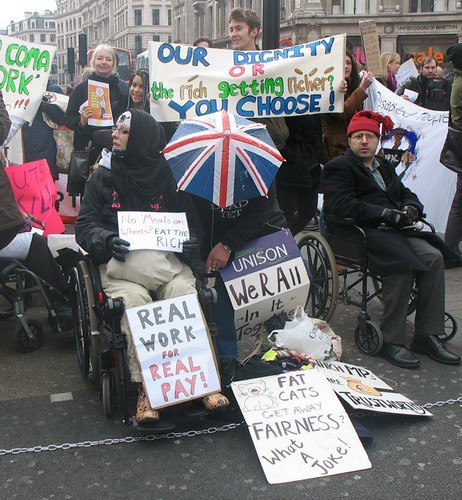
IN many ways, welfare reform is the ‘missing link’ in the argument that New Labour is creating a ‘Stasi State’. While attention is on the obvious, such as increased powers of surveillance for the state, the curtailment of rights to assembly and protest, and all the other flagship concepts of civil liberties and human rights, the issue of welfare reform is an over-looked, and perhaps more fundamental, vehicle for transforming the nature of our relationship with the state: from citizens to a cowed and passive – controlled – resource.

By any measure, a consumer is not a citizen, nor are they expected to be, but for a long time now the status of consumer has run parallel to our status as citizens, and has slowly, almost imperceptibly led to the downgrading of the latter, like a conceptual cuckoo altering our relationship with each other, with the agencies of state, and with the retailers as the primary gateway to the whole supply-side of the economy. The consumer pushes the citizen out of the nest and leaves its aspirations and hopes a shattered egg. Thus does the symbiotic beast that is the State and private corporate interest enclose and demote a citizenry, but it is not enough in and of itself.

These days we no longer work to live, or indeed live to work; we work to consume. The very consummation of the economic relationships today is to complete the retail transaction, such that consumerism has become the very essence of self-validation. The entire culture of vacuous celebrity in some ways takes this to its extreme, at once pushing the dream of fame and fabulous wealth – the freedom to consume at the uber level – whilst manufacturing the glamorous hollow shells that sell such lifestyle dreams, along with the glittery objects, that entice the consumerist magpie to give of themselves to the retailer in the arcane pursuit of shopping.

Pity those locked out of the cycle of consumerism by a lack of work; theirs is the most basic form of consumption, but the Government’s latest welfare reform bill promises to get the millions languishing on the dole queues 'back to work' – and therefore able to partake of their consumer rights. Forget citizenship, let’s shop, the grateful hordes might say as they contemplate spending their first wage packet – assuming they have much disposable income after they’ve forked out for the basics.

Welfare reform, tackling the ‘dependency culture’ of benefits, of forcing the ‘work-shy’, the ‘feckless’, the ‘scroungers’ off benefits and into a job where they can pay their way in society is a perennial and timeless issue. It has cropped up in one form or another for generations. Meanwhile, the claimant counts have risen and fallen in tune to economic cycles, and the changing methods government’s employ to measure the statistics, but the vehemence of the rhetoric has seldom changed. The stick has always been preferred to the carrot. And unlike a banker, a benefit claimant can’t bite the hand that feeds it.

The latest Welfare Reform Bill, born in the latter weeks of 2008, and currently undergoing the Parliamentary process, has been no different. The language has been one of rescuing potential, of spreading the benefit of work, of tackling social blights born of trans-generational worklessness (born of the 1980s era of mass unemployment and recession), of raising aspiration, and giving people a stake in their lives and in society – and there’s plenty of stick for the idle, feckless scroungers who fail to fall in line and get a job.

Here’s how James Purnell, then Secretary of State for Work & Pensions, commented on the Bill at the time of its introduction: “These reforms will transform people’s lives. We will give people on benefits the personal support they need to help them make a better life for themselves and their families. I believe that for the majority, work is part of the path to that better life which is why our reforms put the individual, and their needs, at the heart of the welfare system.

“We will give people the support they need and in return we will have higher expectations on people to take up that support. We must have a system where the rules are fair for everyone, and everyone knows what the rules are. I believe it is wrong to have a welfare system which doesn’t encourage people to prepare for or get back to work. In future virtually everyone will be expected to do something in return for their benefits.”

On the face of it, who can argue against helping people into work? The issue is one of trust; trust that the Government means well. There is a fear that people unfit for work will be bullied into inappropriate jobs. There is fear that forcing single mothers into work too soon will hinder the well-being of their child. There is fear that the Welfare Reform Bill is about contempt for the issues of fairness it touts, and a boot stamping on the aspirations it claims to invoke. Rather than work setting people free, it is a bill that permits ministers to shake their macho fists in the faces of the poor – and ‘clap them in irons’.

“The architect of the welfare reform bill, Purnell, leaves in his wake the most vicious attack on the Welfare State and its recipients since its founding,” said the trades union PCS.

Since the bill was launched, its patron Parnell has jumped ship. His was one of the high-profile resignations at the time of June’s European elections, when the electorate shook its angry fist in Labour’s face. Parnell, together with his fellow ministerial drop-outs, was not so much a rat leaving the sinking ship, as a rat trying to gnaw holes in the hull, but though he has gone, his Bill remains like a dread spectre hanging over the heads of the poor and unemployed, the sick and the unfortunate and, yes, even the lazy.

And contrary to what many might think, it hangs over the heads of those who already work. Perhaps, in many ways, they are the primary targets of the Government’s bile: be passive, they growl, behave, don’t cause any trouble.

Make Of The Poor An Institution

PEOPLE on benefits get a poor press these days; but wasn’t that always the way? For sure, there are those who match the media stereotypes. After all they were used as the template to construct the poor archetype, but while it is easy to uncover the ones who are politically useful – that is they justify the clenched fist approach – there are many more who are the victims not of their own shortcomings but of the economy, of political decisions past and present, and of the system devised, designed and implemented by wealthy, privileged people to contain them in the institution of poverty.

And we should make no mistake, poverty is not some naturally occurring phenomenon, it is very much an institution. It is created and maintained by human agency, reflecting the social, political and economic relationships and frameworks that help to shape society at large. Like every other manifestation of these representations, it relies upon its inmates perpetuating the poverty, of becoming ‘institutionalised’, but it also requires the wealthier segments of society to maintain the means to perpetuate poverty. To put it another way, its continuation demands passive acceptance, not just by the poor but by the wealthier sections of society too.

Poverty not only afflicts those on benefits; it also afflicts many who are in work. That’s why long ago the Welfare State was established – to create a safety net and create a helping hand. For sure, it was far from perfect, and no doubt bestowed by the political class through gritted teeth, but it took the edge off the grinding privations demanded of a capitalist economy.

It is perhaps worth mentioning the irony that the Welfare State was in part launched in response to the bitter memories of the pre-war era of austerity and mass unemployment, but all the same it was not a system built to cater for an era of mass unemployment. Still, it was used as a dumping ground for those ‘culled’ from the workforce in the Thatcherite heyday of privatisation and ‘structural adjustment’ that saw the economy ‘modernised’, jobs shed, and industry relocated overseas at the behest of financiers pushing what we have come to call globalisation.

It is in that era that much of today’s tendency to use the benefits system, the Welfare State, as a delivery vehicle for social control and containment has emerged. In many ways, then, New Labour’s contemporary reform package of the Welfare State was born in the 1980s, It is steeped in the harsh unsympathetic attitude of the era, but dressed up in the finery of the 21st century’s social paternalism that passes for progressive concern.

Many were so broken and ground down by the experience they never returned to work –and the blight of unemployment claimed their children too. Many people remain blighted by the social damage born of that era. After failing to find work, they were eventually shuffled off the unemployment statistics and onto Incapacity benefit. Today such people will be vilified as fraudsters and scroungers under the new regime, when surely the fraud (if there was any) was perpetrated by the State for its own convenience. It’s an old lingering story of past injustice.

Today, as the latest bill was born, Britain slipped into the grip of recession. Unemployment has risen to reach near enough the 2.5 million mark, and some fear it will be above 3 million by year’s end. The TUC recently calculated that the number of dole claimants outnumber vacancies 20 to one in some of the country’s unemployment black spots. For those trapped under the aegis of the new reform bill when it becomes law, then it will be a cruel rock and a hard place they’ll be caught between.

“This is the wrong bill for the economic crisis we’re in,” said Brendan Barber, General Secretary of the TUC. “With thousands of people losing their jobs every week, now is not the time to introduce even tougher conditions for claimants. We’re also disappointed that the Government appears to be persisting with plans that amount to a ‘work for your benefit’ scheme. Paid work is scarce enough. Forcing claimants to work for their dole could make this even worse.”

Mark Serwotka, General Secretary of the PCS union, has said: “The Government’s welfare reform proposals signal the break up of the Welfare State as we know it, with the removal of the state safety net and the introduction of the free market, where the only motive is profit for the few and not help for the many.

“As the recession deepens, these are the wrong proposals at the wrong time, which will lead to people being bullied into jobs that don’t exist,” Serwotka added. “The Government needs to pay heed to the growing chorus of opposition to their plans for welfare reform and put its faith in the professionalism of JobCentre workers who have consistently outperformed the private sector in getting people back to work. We would urge the Government to think again about an approach which goes even further than Thatcher would dare in the 1980s and which stigmatises and demonises people as work-shy.”

On the other hand, while the country is in the grip of recession, with unemployment rising and people fearfully clinging onto their jobs, this might indeed be the ideal time for the imposition of such a regime.

For sure, it looks set to radically alter the Welfare State, but also radically alter not only the claimant’s relationship with the State, but also that of the wider populace. There is no better time, than this current economic crisis for implementing measures to discipline and control not only the potential workforce – the claimants – but also the wider pool of labour currently employed.

Of late, many people have suffered the misfortune of suddenly losing their jobs through redundancy or the collapse of the enterprise that employed them. The rising number of unemployed that have pushed the statistics upwards to 2.5 million haven’t emerged from a sudden outbreak of fecklessness (well, except perhaps at the top of society), so many thousands of people have suddenly and unexpectedly found themselves subject to the benefits regime.

Many of them will have partners, or other kin, who may still be in work, who will inevitably be brought into the intrusive inquisition of the Department of Work & Pensions (DWP). There are many more who may yet lose their jobs and find themselves, perhaps for the first time in their life, walking through the doors of the Job Centre and subjected to an in-depth grilling over their circumstances and why they ended up at the State’s devolved door.

Suddenly, they will stand before the State and be expected to account for themselves. They will be subject to the rules of the State. Their life will be scrutinised, their expectations assessed, their life held up for judgement. For many, it comes as quite a shock. No one, or at least the vast majority of people in everyday employment, are immune from the Job Centre, and the inevitable proximity and scrutiny it brings from the State.

This is one frontline in the measures established to maintain social control; a vehicle for instilling social discipline into the population working or otherwise. It is about subordinating the individual to the needs of the economy. In less abstract terms, that means subordinating people to the requirements of employers, but also to the overarching whims of economic ‘shapers’ such as banks, large-scale corporates, and of course politicians in high office. Ultimately, it is about subordinating us all to the State and its partners.

Those in employment may think this is all beyond them, but as mentioned above, many people never envisioned the loss of their job, but thanks to the recession, not to mention the shenanigans of bankers, they suddenly found themselves propelled into the Job Centre and subject to the rules of that unsympathetic department, the DWP, that oversees its operations.

When is there a better time for establishing such a hardline regime than in a recession? Now is the time to instil the discipline of Purnell’s regime, with fear the bitter lubricant that will help the population swallow the pill of servitude.

There is rather more to it than this, of course; the reform measures will build upon aspects of the benefits regime that will whisper its quiet wiles throughout society. Anti-fraud measures have become commonplace, with adverts warning ‘fraudsters’ to beware, with hotline services to encourage ‘good citizens’ to report a ‘scrounger’. For sure fraud exists, and it is right to tackle it, but at what point beyond the clear cut cases does ‘fraud’ become a mechanism of perpetuating an unjust, cruel and complicated system by punishing those who fall between the gap of its ever-more hardline operation? To what extent are these anti-fraud drives to be taken at face value, and just how much of it, in encouraging curtain twitching, and anonymous informants within our communities, is about making us fearful of one another, and fearful of the State?

There will be those who will wholeheartedly support anti-fraud measures, and get tough attitudes on claimants: ‘I don’t pay my taxes to support scroungers’ might well be the collective cry. But, to pause for a moment’s reflection, do we really wish to live in a country where we cannot trust our neighbours, our family, our friends?

Do we really want to go through life worrying that a husband, a wife, a son or a daughter, a lover or a good friend, might whisper tittle tattle in the ears of some official – to our cost? What kind of world will it be, when we live immersed in a society of anonymous informants, when the veracity of their information cannot be readily challenged, and when rumour – whether true or false – hearsay and gossip can condemn any one of us at any time?

Those who have nothing to hide have nothing to fear. So, are you feeling suitably relaxed now? Welcome to the ‘surveillance society’.

Stand To Attention And Report

ON the face of it, there is controversy enough over the conventional aspects of the Welfare Reform Bill, but the real essence of the Bill – and therefore of this essay – is its contribution to establishing the ‘surveillance state’, the pet project of New Labour’s stern authoritarianism, that will enclose society in a cage of frightened obedience to authority.

The Welfare State, the ‘workfare’ measures of the Welfare Reform Bill, along with the huge tip in the relationship between citizen and State that it inaugurates, introduces an otherwise overlooked aspect of what is called the ‘surveillance state’.

The phrase is a euphemism used to describe one sub-set of elements that make up the drive to create a more authoritarian state. If the surveillance society, the quasi-Stasi State, of common parlance, reflects one facet of New Labour’s architecture of an authoritarian police state, then the Welfare Reform Bill is another, less contemplated, vehicle for instilling social discipline and establishing command and control over our communities and individual lives. The Welfare State, if so transformed by the bill, is part and parcel of eradicating civil society. One might say it will ‘nationalise’ the workforce in practice, if not in principal; de facto if not quite de jure.

And so the machinery of state continues to envelop us, leaving precious little space to call our own, to do our thing, to articulate and express ourselves, to negotiate a place where we might imagine ourselves as free. And the beauty of benefits, courtesy of the propaganda of the scrounger, is that we can do much of the policing ourselves, on the State’s behalf – turning the screws of fear and mutual contempt and inoculating one another against any and all arguments that might say ‘hang on, what about?’

The claimants – the feckless, work-shy, scrounging scrotes of popular mythology – like immigrants before and alongside them, provide those useful Orwellian ‘Bernsteins’ to figure as the focus for regular ‘Two Minute Hates’. They channel so much of our resentment and anger on to safe targets, whilst the State looks on and cajoles us from the sidelines. And as it does so, it manufactures the mechanisms of our slavish consent, and the systems to crush and dissipate our dissent. We will become our own jailers.

So, welcome to the Job Centre, the unacknowledged gateway to tomorrow’s stern moral order. The State is everywhere, and everyone is under the duress of the State.

Of course, the State is not a distinct singular entity, but nor is it quite distinct from what is often called the private sector. It is often amusing to see the regular accusations of ‘socialism’ made against New Labour. The stern and controlling aspects of New Labour apparatchiks are no more a remnant of their ‘socialist’ tendencies than are Peter Mandelson’s relaxed attitude towards the filthy rich.

The State and Big Business have long had a tendency to blend at the edges. At times they are further apart, and at others they run more closely into the other, but the two are never entirely distinct. So when one talks of New Labour devising mechanisms to subordinate civil society ever more to the State, it must follow that they wish also to subordinate to the requirements of Big Business.

And so, this complex beast strives to encapsulate us all within its influence, within its purpose, establishing the vehicles and mechanisms to achieve our incorporation. And if there is ever any saving grace for we ordinary folk, it is that – joined at the hip though they are – State and Big Business make for fractious siblings, constantly bickering, even as they seek to scoop us under their mutual wing.

Tony Shows The Way

TONY Blair, when he was leader of the party, once liked to talk about the ‘Third Way’. The concept has an interesting history. Fascism once talked of itself as the third way. Whether Blair was aware of this history is neither here nor there, but the concept of fascism recognises the fractious unity of State and Big Business. Indeed, Mussolini once commented that fascism should be more rightly called ‘corporatism’. To use business-speak, it was about the merger of State and Big Business, realising the synergies between the two to achieve their mutual interests.

One doesn’t need a fetish for uniforms and paramilitary strutting to be a corporatist, nor does one need to be a fascist to be enamoured of the synergy between Big Business and the State. One can in fact be a representative of a political party playing the election game in a broadly liberal democracy. So long as the population can be cajoled, contained and controlled, encouraged to remain passively accepting of their lot, then the structures and institutions become almost secondary.

Long in to the future, then, Britain may appear to be a functioning democracy, but New Labour’s electoral purpose of gaining power has pushed it along the road to authoritarianism. Such is the issue of Welfare Reform: it is just another component in building the machinery of a stern State control of our everyday lives. It’s about power for the sake of power, for the allure of power, for the perks of power that are born out of that close and closet relationship with Big Business. It is about keeping us all in our place.

For that, we are surveilled, monitored, recorded in databases; for this reason are we faced down by a paramilitary police; enclosed by unforgiving regulations and laws; and why the Welfare State is planned to become a centre of maintaining social discipline.

In the future, citizenship will be an outmoded concept – but we can be modern consumers complete with our very own barcode – and anything we whisper in private may be recorded and used against us in a secret tribunal. Things can only get better...


Mark Cantrell,
Stoke-on-Trent,
16 August 2009


Copyright © August 2009. All Rights Reserved.


Bookmark and Share


Category: POLITICS

Saturday, 15 August 2009

So, What Is It?

Can’t Win Either Way

“But what is the difference between literature and journalism? Journalism is unreadable and literature is not read. That is all.”

Oscar Wilde, Irish dramatist, novelist and poet (1854-1900)


Bookmark and Share

Category: QUOTES

Free Sample

Free verse on Scribd sample

A selection of poems from the collection Deus Ex Insomnia was posted on the document exchange site Scribd to provide a revealing foretaste of the full paperback book.

The sampler, presented on-screen in PDF format, and available to download free-of-charge, can be found at http://www.scribd.com/doc/18202184/Deus-Ex-Insomnia-Sample.

Deus Ex Insomnia (ISBN: 978-1-84753-507-8), the full paperback version, is available to buy from the publisher Lulu or from Amazon for £5.95. The collection brings together 80 poems by Mark Cantrell, as well as a selection of his prose writing.

To find out more about the full paperback version visit Lulu http://www.lulu.com/content/652684. To try the free sample visit Scribd at http://www.scribd.com/doc/18202184/Deus-Ex-Insomnia-Sample.

MC

Bookmark and Share


Category: NEWS

Sample Citizen

Citizen on the net

HERE’S a new site for aspiring poets and novelists; enovella.co.uk describes itself as a ‘social networking’ site for writers, giving the space to display drafts of their work, comment, gain feedback and otherwise chat online about the creative process.

Find it at www.enovella.co.uk

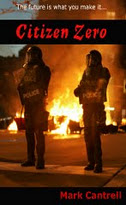
To give it a whirl, the first chapter of my as yet unpublished novel Citizen Zero is now on display for browsers to read and leave their comments. Subsequent sample chapters are set to follow, along with other samples of writing. To find these works visit:


And don’t forget to leave a comment.

MC


Bookmark and Share

Category: PLUGGED

Tuesday, 28 July 2009

Oh, I Do Like To Be Beside The...

Once more unto the beach

Drum rolls may not have accompanied the opening of Blackpool’s latest ‘exciting’ new development, but one certainly hopes the stupendous event was met with an array of rolled eyes.

Talk about shifting sands, but the English seaside resort, famed for its Eiffelesque tower, its seafront entertainment, and, well, its beach has opened its latest must-have attraction for resort junkies – a brand new, er... beach.

Surely Blackpool already has a beach? Well, yes, but the apparatchiks heading up the urban regeneration company ReBlackpool, one of a plethora of quangos tasked with spending money ‘revitalising’ and ‘regenerating’ Britain’s towns and cities, clearly thought that nature’s sandy offering just wasn’t good enough.

The problem was tides. That dastardly natural phenomenon meant that Blackpool beach was inundated by the sea twice – twice! – a day. Something had to be done. Now, ReBlackpool must have done its homework, or at least heard about old King Canute, so they didn’t try that little number. If the sea can’t be kept at bay, then let’s take the beach from the sea.

So, the organisation spent £45,000 to create an artificial beach, 180 metres long, on St Chads headland. They shifted 5,000 tonnes of local sand from nature’s beach to the man-made imitation, so the existing sand can’t have been that bad.

Here’s how the organisation’s chief executive, Doug Garrett, enthused about the cloned beach: “This new beach will offer a unique opportunity to residents and visitors to enjoy the thrills and spills of beach volleyball, football and basketball regardless of whether the tide is in or out. We lose the beach twice every day because of the tides – but this beach on the prom will put an end to that and allow people to play sports or relax in the sand as and when they want to.”

Hurrah for human ingenuity, then, not to mention the largesse of quangocrats with a blank government chequebook to underwrite another meaningless gimmick – what would poor old Joe Public do without them!

So much for PR-newspeak, but surely one of the essentials of the beach resort experience are the tides? In any case, wouldn’t the money have been better spent on boosting the attractions and entertainment on the seafront; the traditional way of enjoying a resort while the tide is in? Perhaps such a question reveals just why this grizzled old hack isn’t a regeneration apparatchik with a small fortune to spend.

Still, at least the local feline population will be pleased with the new toilet facilities, then again perhaps not. The bill for the beach includes two machines intended to clean the sand on a daily basis. ReBlackpool has clearly thought of everything.

For those of a certain generation, they might recall Neil Kinnock’s unfortunate sandy fall from dignity when he stumbled on a beach in front of the nation’s TV news cameras. That was when he was the leader of the Labour Party back in the 1980s. One wonders if it was why ReBlackpool invited Glenys Kinnock to open the beach on the 9 July.

The Europe Minister was perhaps considered more likely to maintain her footing than her husband as she cut the ribbon.

Blackpool’s beach mk II is billed as a 24-hour-a-day attraction, and will be kept open for six weeks. The beach will be dismantled on the 17 August to make way for the beach volleyball CEV European Championship Tour and the English Masters tournament, which is being held on the promenade from 10-13 September.

When the sandy beach finally shuffles away, however, it might only be a temporary absence; the regeneration company says it will be assessing the beach to test the feasibility of rebuilding it on a permanent basis in the future. So, there is more to beach mkII than “fun, games and relaxation” – but also a serious measure to study the effects of “wind and traffic movements on the sand”. ReBlackpool also want to study how “the public interact with and use the beach”. So, they’re building sandcastles, then?

Quite why they couldn’t use nature’s offering to study how people “interact” with the sand is another matter. Oh yes, blast – those damnable tides might wash the clipboards away. Life is such a beach.

MC

Bookmark and Share

Category: NEWS

Sunday, 26 July 2009

Stony Offerings

Get stony in Limerick

As part of the preparations for the annual Cuisle – Limerick City International Poetry Festival – the editors of The Stony Thursday Book are calling for submissions from poets the world over.

The next issue of the journal is to be published as part of Cuisle in October and the deadline for receiving poetry submissions is 10 August 2009. The festival will run from the 14th to the 17 October 2009.

This year’s edition of The Stony Thursday Book will be edited by Ciaron O’Driscoll who was born in Co. Kilkenny in 1943 and who lives in Limerick. He published eight books of poetry and has won a number of awards for his work, among them the Patrick & Katherine Kavanagh Fellowship in Poetry. In 2007, he was elected to Aosdána.

The Stony Thursday Book is said to be one of the longest-running literary journals in Ireland and celebrated its 30th anniversary edition in 2005. The journal was founded by Limerick poets John Liddy and Jim Burke in 1975. Since then it has also been edited by Mark Whelan, Kevin Byrne, Partrick Bourke and Knute Skinner and Thomas McCarthy.

To submit to the latest issue, send no more than six poems by post to: The Stony Thursday Book, The Arts Service, Limerick City Council, City Hall, Merchant’s Quay, Limerick. Ireland. Or by email to artsoffice@limerickcity.ie (mark in the subject line for The Stony Thursday Book). Each page of the submission must bear the author’s name and address.

Cuisle 2009 is the 12th festival in Limerick, celebrating local, national and international excellence in poetry, the organisers say. Over the four days of the event, poets from all over the world will visit the city, and there will be a host of book readings, discussions groups, and workshops with leading poets.

MC


Bookmark and Share


Category: SUBMISSIONS

Friday, 24 July 2009

Reading With Fire

Yorkshire Monkey gets the verse

One of Barnsley’s oldest established country pubs is hoping that a regular fireside gathering of poets and poetry will entice a few extra punters out for a pint.

The Monkey, formerly known as the Eastfield Inn, on Hollingmoor Lane, Thurgoland, is running The Poetry Fireside Hour on the last Wednesday of every month. The sessions are free, and anyone who wants to attend to just listen, or take part, are advised to arrive by 8.45pm. The poetry runs from 9pm to 10pm.

“Local poets and lovers of the word are encouraged to leave the TV and computers to gather round the pub fireside and read their own poems or a favourite rhyme, song, lyric, monologue and so on,” a spokesperson said.

“The emphasis will not be on performance just a casual and comfortable read round in the cosy sofas around the welcoming fire. The evening will be hosted by local celebrity and published poet Granville Danny Clarke.”

Clarke gained his local celebrity status through his musical career with the Foggy Dew-O and art expert role on Channel 4’s ‘Watercolour Challenge’.

MC

Bookmark and Share

Category: NEWS

Thursday, 16 July 2009

A Little Something From The Day Job

Gordon’s last stand

After the turmoil of the last two months, Gordon Brown has come out fighting to build Britain’s future, with a programme that ‘green lights’ some long-cherished elements of the housing wish list, but is this the last stand of a punch-drunk PM or a concerted no-holds barred campaign to finally make a real difference? Mark Cantrell reports


Shared via AddThis

Category: JOURNALISM

Saturday, 4 July 2009

Taste The Space

Blood sample free to taste

A free sample of Isolation Space, featuring the story One For The Road, is available to download or read online at Scribd, adding a new blood-curdling twist to vampire fiction.

The full paperback anthology features 20 short stories by UK author Mark Cantrell. The full collection presents a thrilling mix of science fiction, horror, fantasy and satire, including a number tales that take new blood to the vampiric theme.

Jim Palmer, editor of the literary magazine Writers’ Muse, said: “[I]f you’re a science fiction fanatic and hanker for the ‘Golden Age’, then you can do no better than to get hold of a copy of this book. The pieces I read took me back to the wonder I felt when I first discovered science fiction and horror. And I loved it!”

Isolation Space (ISBN: 978-1-4092-7030-0) is available from Lulu or ordered through good bookshops priced £9.99. Read the sample at Scribd, or visit Lulu to order a copy of the complete anthology.

MC

Bookmark and Share

Category: PLUGGED

Template by - Abdul Munir | Daya Earth Blogger Template